
Purchasing an avalanche transceiver is the equivalent of starting a long term relationship. Their online profile looks shiny, it claims to have all the features (reliable, fast, sleek) so you go ahead and swipe right… then you get to know them, oh my. Like the dating world shiny isn’t always better when is comes to avalanche transceivers.
Read below for 7 things to look for when purchasing an avalanche transceiver.
Harness” title_style=”standardstyle” Hold me tight but also give me space.

First things first. The transceiver harness does take a bit to get use to. Adjusting to find the right spot that doesn’t drive you too crazy is a bit of a game. We want to wear our transceivers against our baselayer. That way it’s under our jacket and we don’t need to take it off at any point during the day when we are adjusting our layers.
You want to find a harness that is comfortable and allows your to take the avalanche transceiver out while having room to work. Most of them have a cord that attaches to the harness. This allows you to complete your search while the transceiver is still attached to you. Test out the cord for stretch and make sure you are able to get the transceiver low to the ground. Be warned; there are transceivers on a short cord in the world making searching awkward. This is especially true when you want to get low with your fine search
Batteries or RECHARGEABLE” title_style=”standardstyle” How do you recharge?”]
Most avalanche transceivers use AAA alkaline batteries. (side note it is important to use alkaline and not rechargeable or lithium batteries for reliability). Some companies have started offering rechargeable avalanche transceivers like ortovox.
While we love the idea of a rechargeable avalanche transceiver, we are a bit hesitant of it with hut trips or long traverses. While the transceiver works in cold temperatures the ideal charging temperature is above zero. This could be hard to find if you are winter camping.
If you are planning on day trips and there are no sufferfests in your future, then I would say rechargeable is a great option to help save some waste.
Group check” title_style=”standardstyle” Check in on your friends
Every day before we head out into the backcountry we do a transceiver check to make sure everyone is on and functioning properly. Some transceivers have a group check function which is quite lovely. While not necessary it makes life easier.
Group check reduces the range of the avalanche transceiver (usually down to 1 meter). This allows you to check one person at a time within your 1 meter bubble instead of picking up the whole dang parking lot. Your crew will walk up to you one at a time, stop 1 meter away, and you will hear a beep to say that their transceiver is functioning properly. You want to look at the person and ensure they are in fact one meter away. If they are right up in your face before it beeps then something is wrong with their transceiver. Group check is checking that the range is accurate. The person can not stand closer than a meter otherwise it will give you a warning beep of being too close.
Marking function” title_style=”standardstyle” X marks the spot (actually a flag but close enough)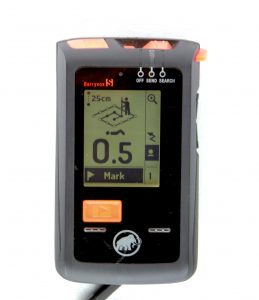
Another lovely function to have on your avalanche transceiver is the ability to flag or mark someone. In a multiple burial situation you follow your transceiver to the closest signal. Once you get a probe strike and delegate a shovelling team you can now mark that signal and continue your search. When you hit the mark button it suppresses that signal allowing you to easily search for the next person.
Do your research on marking buttons and functions. Some transceivers complicate things by giving you a time limit and are not a true mark. You have enough going on out there you don’t need to also be working against your transceivers clock.
We love the mark function on mammut transceivers. Easy to use and reliable!
Switch between send and search” title_style=”standardstyle” How easy do you switch?
We get to see all the different transceivers in action from teaching countless avalanche courses. One thing we see during our practice rescue scenario is accidentally switching transceivers from search to send.
While it is funny to watch people following their friends around due to their transceiver sending a signal instead of searching for one, it is always a valuable lesson.
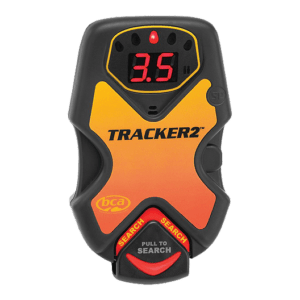
You want an avalanche transceiver that is not going to easily switch back into send when you place it in your jacket or pocket. The older BCA tracker 2’s are a good example of this. They have a pull switch that regularly gets pushed back in when shovelling or probing.
 Auto Revert” title_style=”standardstyle” When you are having a really bad day auto revert has your back
Some avalanche transceivers have an auto revert function.
Depending on the model it will either be motion or time sensitive. If you don’t move for a certain amount of time or reach a set time limit in search, your transceiver will automatically go back into send.
The idea of this is for secondary avalanches. If you are searching a scene and a piece of hangfire or a second avalanche comes down, no one can find you if you are in search mode. A function you hope you never have to use but it’s always better to be safe than sorry.
Antenna” title_style=”standardstyle” Size matters

Have a fear of commitment?
We get it! Join our newsletter and lurk in the background to see what we are up to.
When you are ready to join us we will be stoked to have you!